Medical Tests to Detect CAD
- Blood cholesterol: Blood tests to monitor cholesterol levels are typically performed once every five years for adults between the ages of 20 and 35 if the levels are normal. After age 35, cholesterol tests are typically monitored every two years or every year depending on age, family history, test results, etc.
| Total cholesterol (mg/dL) | LDL cholesterol (mg/dL) | HDL cholesterol (mg/dL) |
| Ideal: Less than 200 Borderline high risk: 200-239 High risk: 240 and over | Ideal: less than 130 Borderline high risk: 130-159 High risk: 160 or higher | Ideal: 60 or higher High risk: lower than 40 |
- Blood pressure: Blood pressure is usually taken during each office visit or other regular interval.
| (mm Hg) | Ideal | Normal | High Normal | Hypertension |
| Systolic (top number) | Less than 120 | Less than 130 | 130-139 | 140 or higher |
| Diastolic (bottom number) | Less than 80 | Less than 85 | 85-89 | 90 or higher |
*source: American Heart Association
- Chest x-ray: A chest x-ray images the heart and surrounding thoracic anatomy, shows heart size and shape, and reveals whether the heart is misshaped or enlarged due to disease. Abnormal calcification (hardened blockage due to cholesterol build up) in the main blood vessels and fluid in the lungs (possible indication of congestive heart failure) can also be seen. Chest x-rays can also be used to image pacemakers and artificial heart valves to check for correct positioning.
- Electrocardiogram (ECG or EKG): An electrocardiogram is a graphical record of the electrical activity of the heart. A normal ECG, in most cases, rules out the presence of other cardiac diseases. An abnormal ECG indicates the presence of a cardiac disease and further investigations are performed. An ECG can be beneficial in detecting the disease and sometimes even the extent of the disease.
- Stress test: A stress test involves taking an EKG before, during and after a treadmill workout to detect possible cardiac disease and/or damage, including the extent of CAD. However, false positive results are possible with stress tests. A stress test is typically performed on adults 40 years of age or older who are at high risk for CAD.
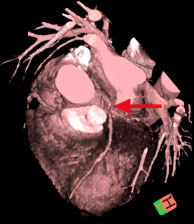
This multi-slice CT image shows narrowing of the arteries (stonosis). Image courtesy of http://www.heartinformation.com